Free Shipping on $30+

Cart
Emerson, Lake & Palmer Boldly Reimagine Mussorgskys Signature Suite onPictures at an Exhibition: 1971 Live Album is a Groundbreaking Fusion of Classical and Prog-Rock Elements, Features Extraordinary Playing
Mastered at MoFis California Studio for Superb Sonics: Mobile Fidelitys Numbered-Edition Hybrid SACD Plays with Breadth, Detail, Presence, and Clarity
Emerson, Lake & Palmer were so committed to their visionary interpretation of Modest Mussorgskys Pictures at an Exhibition that the group recorded it twice. Unsatisfied with the quality of what was supposed to serve as the take for a concert album, ELP booked a different venue to stage another show and paid for production out of their own pocket. Following hours of rehearsals and sound checks, ELP delivered a performance for the ages. Originally issued five months after the bands sophomore LPTarkus,Pictures at an Exhibitionlanded in theBillboardTop Ten and became a linchpin of the prog-rock canon.
Mastered at Mobile Fidelity Sound Labs California studio and housed in mini-LP-style gatefold packaging, the fabled album comes to life with spectacular dimensionality, breadth, and detail on this numbered-edition hybrid SACD. It doubles as an admission ticket that never expires to the band’s March 26, 1971 date at Newcastle City Hall. The primary difference from not being there in person? The levels of clarity, presence, and separation are such that you’ll immediately be grateful nobody is impeding your view or gabbing beside you as you soak in one of the most celebrated crossover experiments in history.
What you will hear is cut from the best-possible source, and just might be the master. Mobile Fidelity Sound Lab engineers observed that the tape box that contained the source tape is marked Masters but cannot definitively confirm that is the case giventhe tape had no splices or other indications that can be taken as absolute proof that this was a master. As such, the label erred on the side of caution when it came to provenance. The sonic results, however, are definitive.
So place the disc in your SACD tray and immerse yourself in this daring, extremely successful reimagining of a piano suite conceived in 1874 by Mussorgsky. ELP had been familiar with the classical piece since the group formed. Keyboardist Keith Emerson had attended an orchestral performance of the work and acquired the score, then floated the idea to his mates that they should adopt at least parts ofPictures at an Exhibitionin their live shows. The band soon embraced the challenge of adapting the entire composition for the stage. Once it completed sessions for its sophomore LP,Tarkus, the trio decided to record it for official release.
Bolstered by three original additions to the suite and a Nutrocker encore thats a playful rock n roll take on Tchaikovskys Nutcracker,Pictures at an Exhibitionsimultaneously blurs lines between genres and epitomizes the trios virtuosity and verve. Adopting four of the original 10 parts and the two transitory promenade sections, the effort surges with energy, cohesiveness, and extraordinary musicianship. This aural tour of works displayed at a St. Petersburg academy by painter Viktor Hartmann is at once celebratory, theatrical, moody, and glorious.
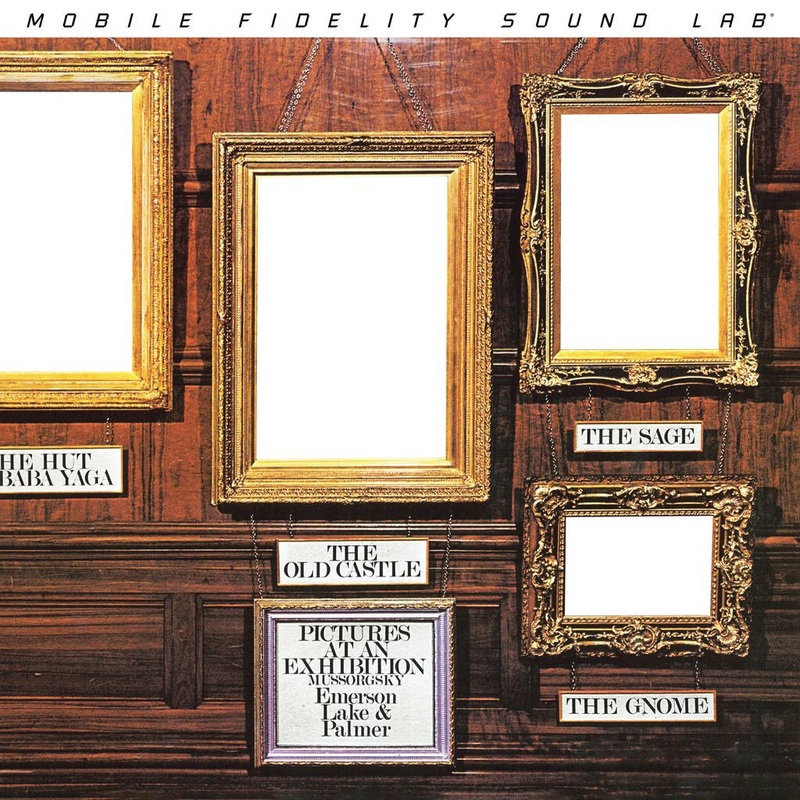
Fans who heard it broadcast in its entirety on a New York radio station immediately realized its merits. Their loud clamor for an official release Atlantic Records had delayed the album due to disagreements with the band regarding how it would be promoted and priced ultimately led toPictures at an Exhibitionstreeting in November 1971, further distinguished by William Neals artwork and his depictions of oil paintings with imagery connected to ELP.
Incorporating four of the 10 movements featured in Mussorgskys original suite as well as the recurring Promenade theme, ELPs version of the 1874 composition begins, as it should, with remarkable fanfare. Emerson commences with a pipe organ solo that threatens to make your internal organs vibrate. The fireworks have begun. Fuzz bass, Moog synthesizer, and Hammond organ lay the foundation for the tension-rife The Gnome and, minutes later, Greg Lake steers the procession in a different direction via tender acoustic-guitar patterns on the medieval-themed The Sage. ELP is feeling it. And how.
The trio casts The Old Castle as a fast-tempo romp, cedes the spotlight to Emerson on Blues Variation, and ups the pace and chase during The Hut of Baba Yaga. ELP tint The Curse of Baba Yaba with an aptly threatening atmosphere, a trait Palmer underscores with a menacing beat and Emerson increases with his wailing-siren Moog passages. Firing on all proverbial cylinders, the collective finishes its Mussorgsky interpretation with The Great Gates of Kiev, an ecstatic gesture that exudes fulfillment, joy, and relief. What a rush.
1. Promenade
2. The Gnome
3. Promenade
4. The Sage
5. The Old Castle
6. Blues Variation
7. Promenade
8. The Hut of Baba Yaga
9. The Curse of Baba Yaga
10. The Hut of Baba Yaga
11. The Great Gates of Kiev
THE END
12. Nutrocker
You may also like
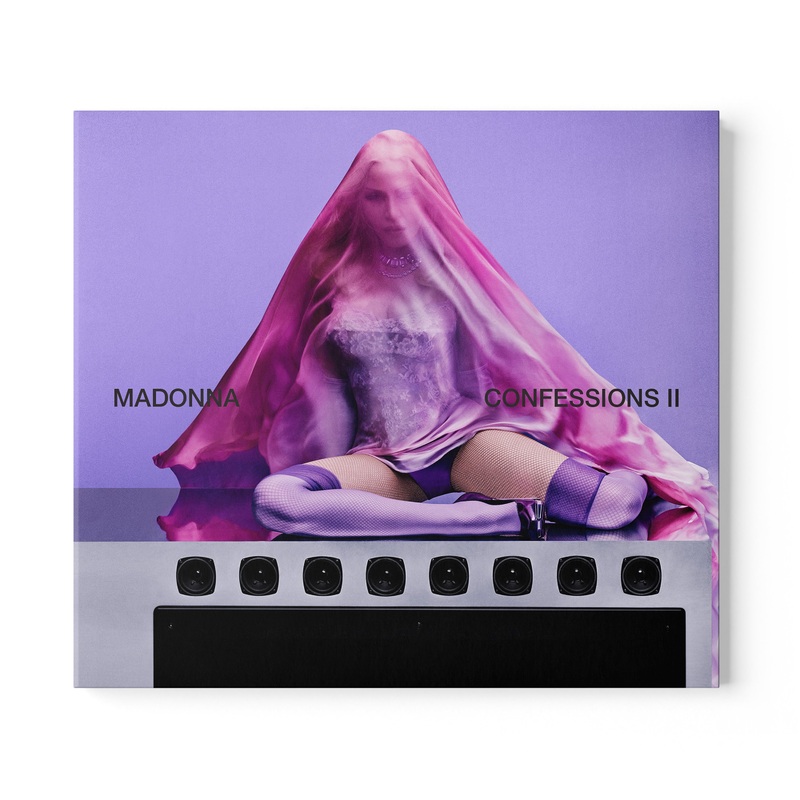
PRE-ORDER: Madonna “CONFESSIONS II” CD
Original price was: $14.99.$8.99Current price is: $8.99.
Population II “Maintenant Jamais” CD
Original price was: $11.99.$7.19Current price is: $7.19.
